
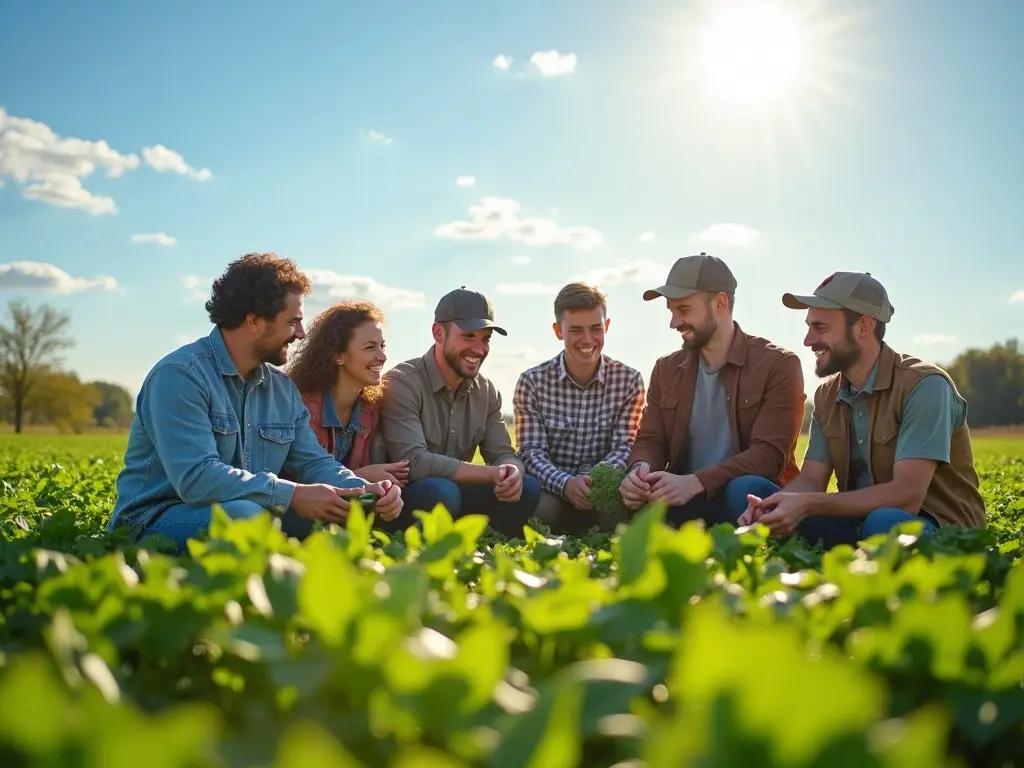
Across the fertile plains and diverse landscapes of the European Union, a troubling reality casts a shadow over bountiful harvests the Green Revolution made us get used to: a severe labor shortage hinders the agriculture sector. As the average age of farmers creeps higher — 58% currently are above 55, according to Eurostat — a critical question looms: who will farm in the future?
A crisis is still pending, but a solution is already on the way
This demographic challenge, coupled with increasingly complex farming practices and stricter regulations, paints a stark picture. Farms struggle to attract and retain young talent, while older generations may face physical and technical limitations, and the lure of retirement. The consequences are worrisome, impacting not just individual livelihoods but also food security and sustainable practices across the continent. But amidst the crunch, innovation sparks hope. Engineering ingenuity is emerging as a potent weapon in the fight against the labor shortage, offering tangible solutions to alleviate the pressure on farmers and cultivate a more sustainable future.
Precision is the new power
Imagine tractors navigating fields with laser or GPS-guided accuracy, harvesting crops with minimal human intervention. Pieces of highly digitalized agricultural equipment with cutting-edge sensors and autonomous capabilities are already present at the fields, performing tasks like planting and plowing, and even harvesting with remarkable precision. These machines assisting human work not only reduce the physical burden on farmers but also free up their time for strategic tasks and decision-making.
Data is a new input — and also, a new output of farming
From smart irrigation systems that optimize water usage to AI-powered yield prediction tools, the digital revolution is transforming farming into a data-driven enterprise. These innovative solutions gather and analyze vast amounts of information, empowering farmers to make informed decisions about resource allocation, pest control, and crop management. This not only maximizes efficiency but also minimizes waste and environmental impact. As data becomes more-and more important, not just its management turns into lucrative business, but its harvesting and deployment as well. Joining pilot projects may represent great opportunities for farmers to get a slice of the information market their whole industry will soon use.
Digital machines, like physical ones, are here to help — not to rule
It's important to remember that technology is not meant to replace the human touch altogether. Instead, it should augment the capabilities of the farmer, allowing agricultural professionals to focus on higher-level tasks that require ethical or taste-based decisions, knowledge outside of the predictable realm of probability, or critical thinking. The future of agriculture lies in collaboration between skilled individuals and intelligent machines, each leveraging their unique strengths for a more productive and sustainable future.
The EU realized the need, and counts with its costs
While the road ahead presents challenges, the European Union is actively supporting innovation in agriculture through initiatives like the Horizon 2020 program, the Green Deal, or the European Innovation Partnership for Agricultural Productivity and Sustainability. By fostering research and development in agricultural technologies, the EU aims to bridge the labor gap and create a brighter future for the sector. It seems inevitable, that agricultural robots will help out in farms other parts of the world. The EU’s agility, which allowed the community to lead this race, may will turn into fruitful business internationally as well.
The worker crunch in agriculture is a tangible reality, and, while it seems to become a permanent one even in the long run, it does not have to define agricultural productivity. By embracing engineering solutions, data-driven insights, and a collaborative human-machine approach, we can cultivate a future where innovation fills the fields with self-driving wheels, instead of human hands. And why it is highly unlikely that “less is more” in this particular case of labor, we can be hopeful, that “less will be enough.”